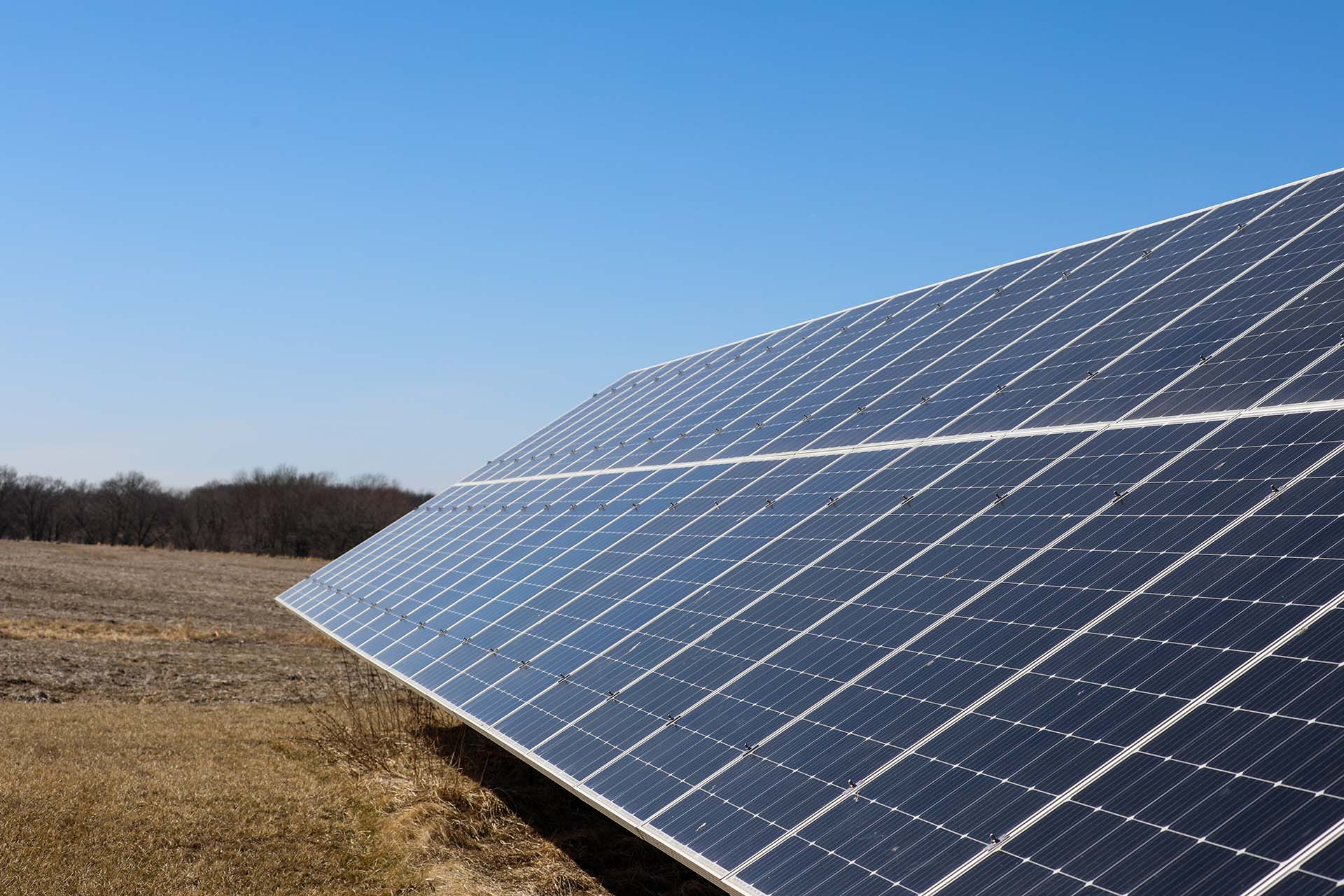
Thinking about installing solar?
We’re here to help you understand how solar energy works, whether it’s a good fit for your home or business, and how it interacts with our cooperative’s electric system. Our goal is to provide clear, practical information so you can make informed decisions about solar energy.
Installing solar panels is a big decision. While solar can be a great fit for some members, it’s not the right solution for every home or business. Before you invest, consider these key factors:
Do You Have the Right Location?
Solar panels perform best when:
-
Your roof faces south or west
-
You have little to no shade from trees or nearby buildings
-
Your roof is in good condition (panels last 25+ years)
-
You have adequate space for the system size you need
If your roof is shaded, aging, or poorly oriented, solar production may be limited.
Does It Make Financial Sense for You?
Solar is a long-term investment. Ask yourself:
-
How long do you plan to stay in your home?
-
Are you prepared for the upfront cost?
-
Have you reviewed financing options?
-
Have you calculated the payback period?
Keep in mind:
-
Solar reduces the amount of energy you purchase, but it does not eliminate your monthly bill.
-
The Service Availability Charge still applies, as it covers the cost of poles, wires, transformers, meters and maintaining reliable service 24/7, 365 days a year.
Do You Understand How Solar Works With the Grid?
Even with solar panels, most members remain connected to the electric grid. This ensures:
-
Reliable power at night
-
Backup during cloudy days
-
Immediate power if your system is not producing enough energy
Solar systems automatically shut off during power outages unless you have battery storage, which is an additional cost.
Have You Reviewed Your Energy Usage?
Solar systems are sized based on your historical energy consumption. Before installing:
-
Review 12 months of past electric usage
-
Consider upcoming changes (EV purchase, home additions, new appliances)
-
Look at energy efficiency improvements first
In many cases, improving insulation, sealing air leaks, or upgrading appliances may provide a faster return on investment than solar alone.
Solar can be a smart investment when it aligns with your home, budget, and long-term plans. Our goal is to ensure you have accurate information so you can make the best decision for your situation.
Contact us before installing - we’re here to help you navigate the process.
Installing solar is a significant financial investment. Before moving forward, it’s important to understand both the upfront costs and the long-term impact on your electric bill.
Upfront Costs
Solar systems require an initial investment for equipment, installation, permits, and potential electrical upgrades. Costs vary based on system size, roof type, and whether battery storage is included.
Ongoing Electric Bills
Solar can reduce the amount of energy you purchase from the cooperative, but it does not eliminate your bill. All members continue to pay the Service Availability Charge, which covers the fixed costs of poles, wires, transformers, meters, and maintaining safe, reliable service 24/7, 365 days a year.
Payback Period
Savings depend on:
-
Your energy usage
-
System size and production
-
Installation cost
-
Available tax incentives
-
Future energy rates
Solar is typically a long-term investment. Consider how long you plan to stay in your home or business when evaluating potential payback.
Incentives & Tax Credits
Federal tax credits may be available for qualifying systems. We recommend speaking with a qualified tax professional to understand how incentives apply to your situation.
Financing Options
Some installers offer loans or lease agreements. Be sure you understand:
-
Interest rates
-
Contract terms
-
Ownership of the system
-
What happens if you sell your property
Before signing a contract, contact us. We’re happy to review your proposal and help you understand how solar would work with your electric service.
Choosing the right solar contractor is one of the most important steps in the process. Taking time to research and compare options can help protect your investment.
Get Multiple Quotes
We recommend obtaining at least two to three quotes. Compare:
-
System size and expected production
-
Total installed cost
-
Equipment brands and warranties
-
Financing options
Be cautious of high-pressure sales tactics or offers that sound too good to be true.
Verify Credentials
Make sure your contractor:
-
Is properly licensed and insured
-
Has experience installing grid-connected systems
-
Provides clear written contracts
-
Offers workmanship and equipment warranties
You may also want to check references and online reviews.
Understand the Proposal
Ask questions about:
-
Estimated annual production
-
How your system will connect to the cooperative’s grid
-
Interconnection requirements and timelines
-
What happens if your roof needs repairs in the future
A reputable contractor should clearly explain how the system works and provide realistic savings estimates.
Contact Us Before Installation
Before signing a contract, contact us to review your proposal. We can help you understand our interconnection requirements and how solar will work with your electric service.
Doing your homework now can help ensure a smooth installation and long-term satisfaction with your system.
Before signing a contract, make sure you fully understand your solar investment. Use these questions to guide your conversation with potential installers:
System & Production
-
What size system are you recommending, and why?
-
How much electricity is it expected to produce annually?
-
How was that estimate calculated?
Costs & Savings
-
What is the total installed cost?
-
What incentives or tax credits apply to me?
-
What is the estimated payback period?
-
Will I still have a monthly electric bill?
Equipment & Warranties
-
What brand of panels and inverter will be used?
-
What are the equipment warranties?
-
What workmanship warranty do you provide?
Installation & Maintenance
-
Are you licensed and insured?
-
Who will perform the installation?
-
What happens if my roof needs repairs or replacement later?
-
What maintenance is required over the life of the system?
Grid Connection
-
How will my system connect to the cooperative’s grid?
-
What are the interconnection requirements and timelines?
-
What happens during a power outage?
We encourage you to gather multiple quotes and carefully compare proposals. If you would like us to review your contractor’s proposal before installation, please contact us - we’re here to help you make an informed decision.
Here’s a list of common solar energy terms and definitions:
Solar Panel:
A device that converts sunlight into electricity. Panels are made up of multiple solar cells.
Solar Array:
A group of solar panels connected together to generate electricity.
Inverter:
Converts the electricity produced by solar panels (DC) into usable electricity for your home or business (AC).
Kilowatt (kW):
A measure of power. 1 kW = 1,000 watts. System size is usually expressed in kilowatts.
Kilowatt-hour (kWh):
A measure of energy. 1 kWh is the amount of electricity used by a 1,000-watt device running for 1 hour. Your electric bill is based on kWh usage.
Net Metering:
A billing arrangement where excess electricity your system produces is sent back to the grid, and you receive credit on your bill.
Service Availability Charge:
A fixed monthly fee that covers poles, wires, transformers, meters, and maintaining safe, reliable service 24/7.
Grid-Tied System:
A solar system that stays connected to the cooperative’s electric grid for backup and reliability.
Battery Storage:
Stores excess solar electricity for use at night or during outages. Optional and adds cost.
Peak Sun Hours:
The number of hours per day when sunlight is strong enough for solar panels to produce maximum energy.